


Field Guide · Los Angeles & Orange County
Corporate Event Photography Tips That Hold Up on the Day
Corporate event photography is a discipline of constraints. The lighting is designed for the audience, not the camera. The moments that matter happen once.
Request a QuoteThe client will judge the gallery on its average frame, not its best one. These corporate event photography tips cover what actually works — planning, settings, coverage priorities, and client workflow — drawn from running coverage across Los Angeles and Orange County with a team of seven photographers and five videographers. If you are hiring rather than shooting, start with Corporate Event Photographer Los Angeles instead.
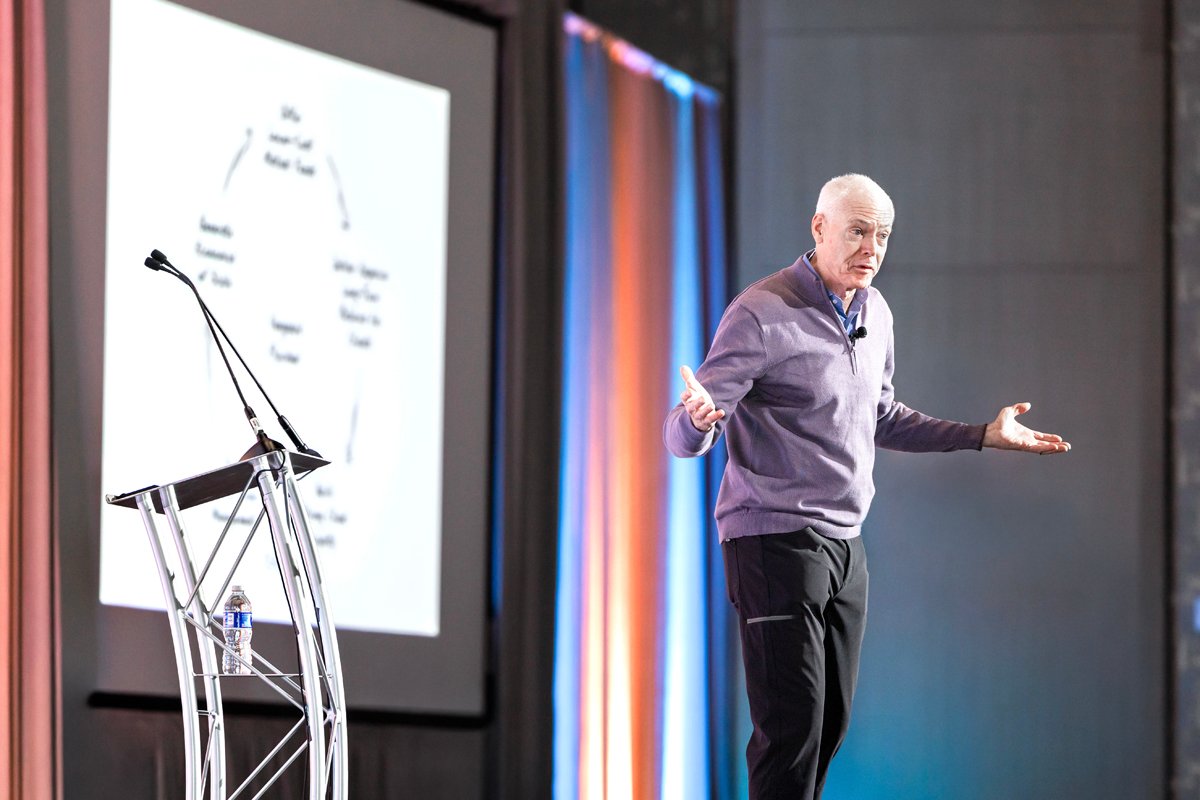
Keynote Under Stage Lighting · Los Angeles
Before the Event
Corporate Event Photography Tips Start With Planning, Not Gear
Most failed corporate coverage fails in planning, not in execution. The photographer arrives without a run-of-show, discovers the room shape at load-in, and spends the first hour reacting instead of shooting.
Get the Run-of-Show, Then Get the Priorities
A schedule tells you when things happen. It does not tell you which three or four moments the client will actually be looking for when they open the gallery. Ask directly: if only five images survive, what has to be in them? Usually it is an award handoff, a specific handshake, a product reveal, or the CEO mid-keynote. Those are single-take events. Positioning gets decided beforehand, not when the name is called.
Also establish where the imagery is going. Photography for a recruiting page, a sponsor recap deck, and a press release get framed differently. Our shot list and run-of-show template breaks this into eight segments.
Scout the Room, or at Least the Floor Plan
When a site visit is possible, take it. When it is not, request the floor plan and the AV diagram.
Ceiling condition. A clean ceiling plane means bounce flash is viable. Chandeliers, exposed truss, dark or colored ceilings, and low clearance mean it is not.
Window walls. Daylight against tungsten is a mixed-temperature problem solved at capture, and it shifts as the sun moves.
Stage and screen setup. LED walls shift color and band on camera. Rear projection behind a speaker is a different exposure problem than a lit backdrop.
Sightlines and access. Where you can stand without being in the AV camera's shot, and whether there is a back-of-house path to stage front.
Settings
Corporate Event Photography Tips for Camera Settings
Most corporate event photography tips on settings start here. There is no single correct setting, but there are reliable starting points. The defining problem in most corporate rooms is dynamic range: the speaker is lit hot and the audience is nearly dark, in the same frame.
Stage and General Session
Expose for the speaker's face and let the room go dark. Spot or center-weighted metering, not evaluative — evaluative meters the whole dark room and blows out the subject. Shutter at 1/250 or faster to hold a gesturing presenter sharp. Aperture wide, f/2.8 or faster. ISO wherever that combination lands, typically 1600 to 6400 in a ballroom. A slightly noisy sharp frame beats a clean blurred one every time.
Set white balance manually rather than leaving it on auto. Stage lighting is often heavily gelled, and auto white balance drifts shot to shot, which turns a consistent gallery into a color-correction job.
Receptions and Networking
Darker than the general session and full of movement. Off-camera or bounced flash becomes necessary, but it has to be shaped so it does not flatten the room's designed atmosphere — the client paid for that lighting. Drag the shutter enough to retain ambient background rather than producing a black void behind every subject. Watch for reflective surfaces: glass, mirrors, polished floors, and metallic decor all send flash straight back at the lens.
Shoot RAW, Dual-Card, Always
RAW gives you the latitude to recover a stage-lit face or fix mixed white balance in post. Dual-card recording configured as backup, not overflow, is not optional on a live corporate event. There is no reshoot. Card failure is rare and total.
Multi-Room Programs
Concurrent breakouts need concurrent photographers working from one briefed run-of-show, or one of the tracks goes undocumented. Settings get matched across shooters before doors so the gallery reads as one event rather than two. See conference photography for how multi-track coverage is scoped.
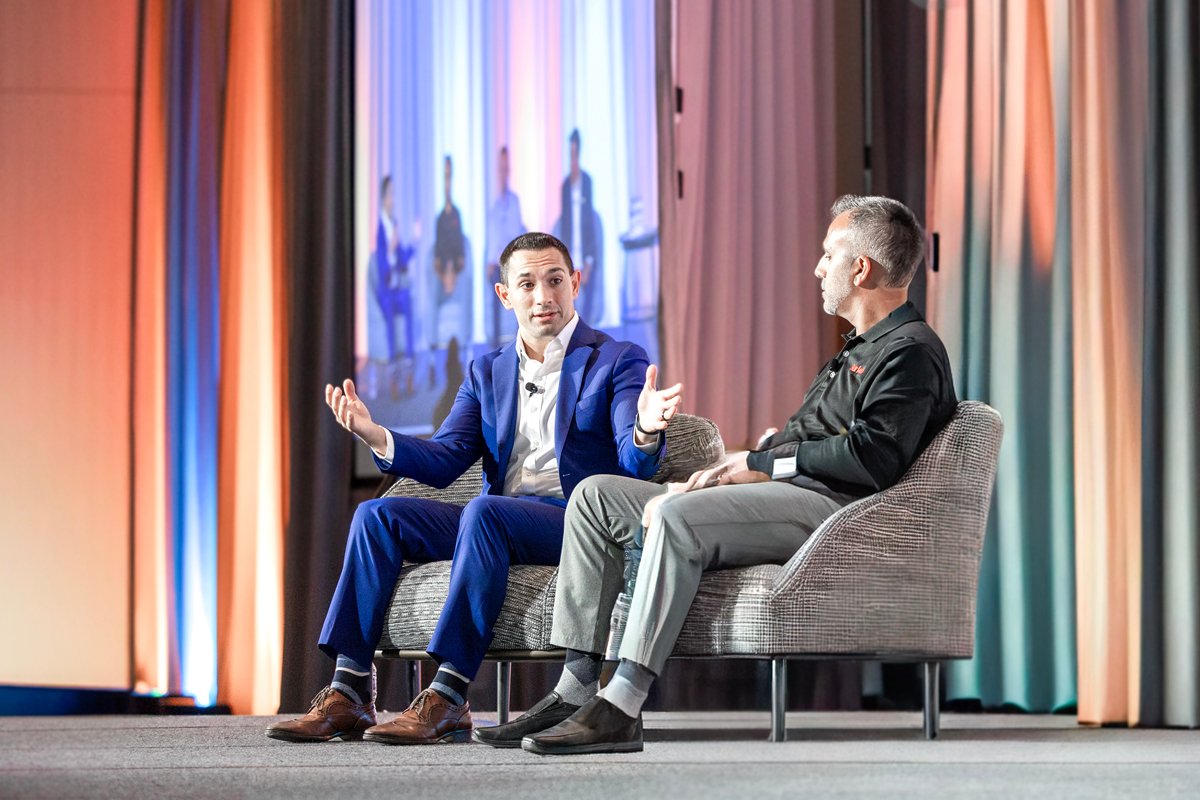
Panel Discussion On Stage · Corporate Event
On the Day
Corporate Event Photography Tips for Coverage Priorities
Candid Coverage
Most corporate event photography tips on candids miss this: they only read as genuine if the photographer's presence did not create them. Working distance is the main tool — a 70-200 lets you capture a real conversation from across the room rather than a self-conscious one from three feet away. Silent shutter modes matter in quiet sessions. Dress to match the room; a photographer in jeans at a black-tie event is visible in every frame's periphery and changes how people behave.
Watch for the moment just after the obvious one — the handshake is the expected frame, but the laugh two seconds later is usually the better image.
Group Photos
The single most-requested image, and where corporate event photography tips are most often ignored. Assembling a full group takes longer than anyone expects and attention scatters fast, so direct with volume and clarity rather than politeness. Stagger heights using steps or risers where available. Stop down to f/5.6 or f/8 so everyone in a multi-row arrangement is sharp, and add light accordingly. Shoot more frames than feel necessary — with twenty people, someone is always blinking.
Branding, Sponsors, and the Room Itself
Frequently underdelivered, and the reason a client is disappointed despite otherwise sound corporate event photography tips being followed. Signage, step-and-repeats, branded environments, and sponsor activations all need deliberate coverage — sponsors fund events partly to receive photographic proof of visibility, and the host needs those images for renewal conversations.
Shoot the room wide and empty before doors open, then again full. The empty frame documents the build the client invested in; the full frame proves attendance. Both get used.
Venue-Specific Conditions
Every property has a lighting signature. Crystal chandeliers throw warm point light that shifts skin tone. Oceanfront terraces give twenty exceptional minutes and then nothing. Glass garage doors put daylight on one side of a room and tungsten on the other. Knowing the room before the day is what separates coverage from improvisation. Profiles for major properties are in the Los Angeles corporate event venues guide.
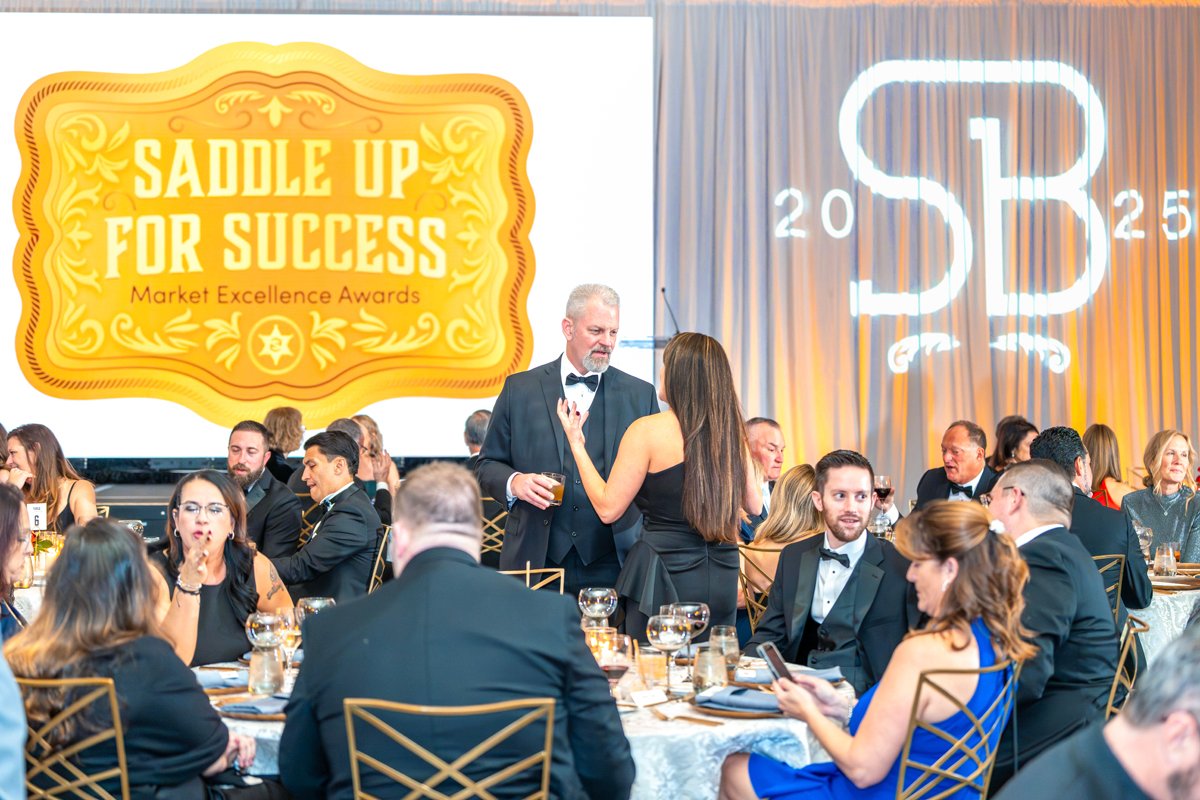
Candid Networking Coverage · Reception
After
Post-Processing and Delivery
Corporate event photography tips on post-production come down to one thing: consistency, not style. The gallery should look like it came from one camera on one day.
Uniform white balance, exposure, and color across hundreds of images shot in several different rooms. Batch-correct by lighting scenario rather than image by image, then refine outliers.
Heavy stylization is wrong for this work. Corporate imagery gets dropped into brand templates, presentations, and press materials that already have their own visual system. A neutral, accurate, well-exposed frame is more usable than a graded one.
On delivery: multi-day events frequently need selects released while the event is still running, for same-day social or press. That cadence gets planned in advance, since it changes the on-site workflow — someone has to be pulling and editing cards between sessions rather than at the end of the night. Elevation delivers edited highlights within 24 hours and the complete gallery within one week, with multi-day programs on a rolling basis.

Branding and Signage Coverage · Corporate Activation
Common Questions
Frequently Asked Questions
What camera settings work best for corporate event photography?
For stage and general session coverage, expose for the speaker's face using spot or center-weighted metering, shutter at 1/250 or faster, aperture at f/2.8 or wider, and ISO wherever that lands, typically 1600 to 6400 in a ballroom. Set white balance manually rather than auto, since gelled stage lighting causes auto white balance to drift between frames.
How do you photograph a speaker when the room is dark?
Meter for the lit subject and let the room fall dark rather than trying to expose for both. Evaluative metering reads the dark room and overexposes the speaker, so spot or center-weighted metering is the correct choice. Shooting RAW preserves the latitude to lift the surrounding room later if the client wants it.
How do you keep candid shots from looking staged?
Working distance is the main tool, since a telephoto lets you capture a real conversation from across the room instead of a self-conscious one from a few feet away. Silent shutter modes and dressing to match the room both reduce your visibility. Watch for the beat just after the obvious moment, which is usually the stronger frame.
What aperture should be used for large group photos?
Stop down to roughly f/5.6 to f/8 so every row stays sharp, and add light to compensate for the smaller aperture. Stagger heights using steps or risers where available, and shoot more frames than seem necessary, since in a group of twenty someone is always blinking.
Why does sponsor and branding coverage matter?
Sponsors fund events partly to receive photographic proof of visibility, and hosts need those images for renewal conversations. Signage, step-and-repeats, and activation areas deserve deliberate coverage rather than being caught incidentally, and it is one of the most common gaps in otherwise strong galleries.
How much editing should corporate event photos receive?
Enough for consistency, not for style. The gallery should look like it came from one camera on one day, with uniform white balance, exposure, and color across every room. Heavy stylization works against the imagery, since corporate photos get placed into brand templates and presentations that carry their own visual system.
Next Step
Hiring Rather Than Shooting?
Send your date, venue, and run-of-show. We return a coverage plan and an itemized quote within 24 hours. Photography is $245 per hour with a two-hour minimum, videography is $345 per hour, and a mobile headshot studio is $495 per day.
Request a QuoteExplore more: corporate photography services · portfolio · corporate events
Explore More
Corporate Coverage Across Southern California